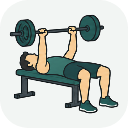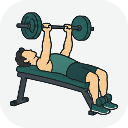
The decline bench press is a barbell press done on a bench angled head-down, which shortens the range and puts the arm path across the lower chest. Most people press their heaviest here, and it is usually the kindest pressing angle on the shoulder — the trade is that you need a decline bench and it does nothing the flat and incline presses do not already cover between them.
How to do it
- Hook your legs firmly before you unrack — you cannot fix your position mid-set.
- Lower the bar to your lower chest, below the nipple line.
- Have a spotter or use a rack: getting out from under a decline press alone is awkward.
Common mistakes
- Going heavier than your flat press because the range is shorter, then losing control.
What it trains
- Chest
- drives the bar up, with the lower fibres doing more than on a flat bench
- Triceps
- extend the elbows through the top half, which is most of the short range
- Front delts
- assist, but noticeably less than on flat or incline — this is the whole reason people use it
Variations and alternatives
Common questions
Is the decline bench press worth doing?
Only if your shoulder dislikes flat benching or you specifically want another heavy pressing angle. The lower chest already gets plenty of work from a flat press and from dips, so for most routines decline is the first chest exercise you can cut without missing anything.
Why can I lift more on decline than on flat bench?
The range is shorter and the shoulder is in a stronger position, so more weight moves a shorter distance. Do not read anything into the numbers across the two — treat them as separate lifts with separate progressions.
Do I need a spotter for decline?
Yes, more than on a flat bench. Your head is below your hips, so getting out from under a failed rep is awkward and you cannot sit up to roll the bar off. If you train alone, use a Smith machine or dumbbells for this angle.
In StackUp. Logged as weight and reps per set, and your heaviest working set decides whether the weight goes up next time. Get the app.
Chest