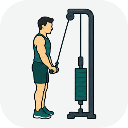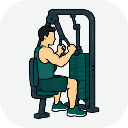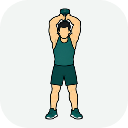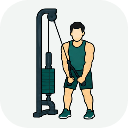
A rope pushdown is a cable pushdown with a rope instead of a bar, which lets your hands split apart at the bottom and turn the palms towards each other. That extra bit of rotation puts the triceps in a slightly stronger finishing position, so the squeeze at the end of the rep is harder than a fixed bar allows.
How to do it
- Split the rope apart at the bottom to finish the contraction.
- Elbows stay pinned — the rope changes the finish, not the rules.
Common mistakes
- Letting the elbows travel forward so the shoulders take over.
What it trains
- Triceps
- extend the elbow, with the lateral head working hardest as the hands split at the bottom
- Forearms
- grip the rope and control it, since nothing holds the two ends apart but you
- Lats
- hold the upper arms pinned to your sides so the elbows do not travel
Variations and alternatives
- Triceps Pushdown
- Overhead Triceps Extension
- Machine Triceps Extension
- Skull Crusher
- Close-Grip Bench Press
Common questions
Rope or straight bar for pushdowns?
Rope if you want a harder contraction at the bottom and happier wrists; bar if you want to load heavier, because a bar does not need you to hold two ends apart. Growth-wise there is very little in it — the rope is mostly a comfort and range choice.
Should I pull the rope apart at the bottom?
Yes, let the hands separate and turn slightly as you finish the rep. That is the one thing a rope can do that a bar cannot, so a rope kept together for the whole set is just a worse bar.
Why do my elbows drift forward on pushdowns?
Usually because the weight is too heavy and the shoulders have started helping by pulling the whole arm down. Pin the upper arms against your ribs, stand a step back from the stack rather than under it, and drop the pin a plate or two.
In StackUp. Logged as weight and reps per set, and your heaviest working set decides whether the weight goes up next time. Get the app.
Arms