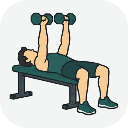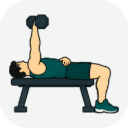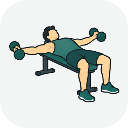
The dumbbell fly is the classic chest isolation: lie on a bench, hold the dumbbells over your chest with a fixed slight bend in the elbows, and open your arms wide before bringing them back together. It trains the chest through a long stretch with almost no triceps involvement — but the resistance disappears at the top, so it is a stretch exercise more than a squeeze one.
How to do it
- Start with the dumbbells above your chest, not above your face.
- Open in a wide arc with a fixed elbow angle, and stop when your chest is stretched.
Common mistakes
- Going too heavy — the fly is the one chest movement where ego gets the shoulder hurt.
What it trains
- Chest
- brings the arms back together, under the most load at the bottom of the stretch
- Front delts
- support the arm at the bottom, where the shoulder is at its most open
- Biceps
- hold the elbow at a fixed angle for the whole set — a bracing job, not a working one
Variations and alternatives
Common questions
How heavy should dumbbell flyes be?
Much lighter than you think — this is not a press, and the shoulder is at its most vulnerable in exactly the position the weight is heaviest. Pick a weight you can control to a full stretch and hold for a second, which for most people is a fraction of their pressing dumbbells.
How far down should I lower the dumbbells?
Until your upper arms are roughly level with the bench, or wherever you feel a strong stretch across the chest without the shoulder feeling loose. Deeper than that is loading the joint capsule rather than the muscle, and it does not buy you more chest.
Cable fly or dumbbell fly?
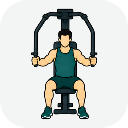
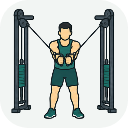
Cable if you want tension through the whole rep, dumbbell if you want the loaded stretch and a bench. The dumbbell version goes nearly weightless at the top, which is why people who train with cables rarely go back to it. Doing both is fine, but not in the same session.
In StackUp. Logged as weight and reps per set, and your heaviest working set decides whether the weight goes up next time. Get the app.
Chest