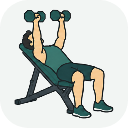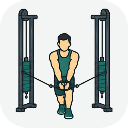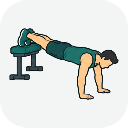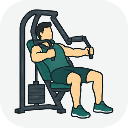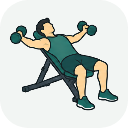
The incline dumbbell fly is a fly performed on a bench set to about 30 to 45 degrees, which points the arm arc up across the upper chest. It is the isolation counterpart to an incline press: no triceps, a long stretch, and the load falling almost entirely on the part of the chest that presses tend to underserve.
How to do it
- Bench at 30°, and the same fixed elbow angle as the flat version.
- Stop the eccentric when you feel the stretch, not when your arms are level with the floor.
Common mistakes
- Letting the dumbbells fall behind the shoulder line at the bottom.
What it trains
- Upper chest
- brings the arms up and together — the incline is what puts the emphasis here rather than on the mid chest
- Front delts
- take more work than in a flat fly, because the incline points the arm path closer to overhead
- Biceps
- hold the fixed elbow bend throughout
Variations and alternatives
Common questions
What incline should I set for flyes?
Thirty to forty-five degrees. Steeper than that and the front delts take over almost completely, which is the same mistake people make with incline pressing — the shoulder is happy to do the chest's job if you let it.
Why do I feel incline flyes in my shoulders instead of my chest?
Usually the bench is too steep, the weight is too heavy, or you are letting the elbows drift back behind the torso at the bottom. Lower the incline, halve the weight, and stop the stretch where you can still feel the chest pulling rather than the joint opening.
Do I need incline flyes if I already do incline presses?
No, but they add something a press does not — the stretched position under load, without the triceps limiting the set. If you only have room for one upper-chest movement, keep the press.
In StackUp. Logged as weight and reps per set, and your heaviest working set decides whether the weight goes up next time. Get the app.
Chest