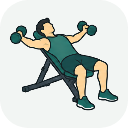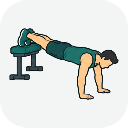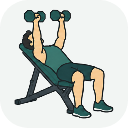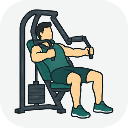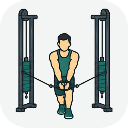
The low cable fly has both pulleys at the bottom of the tower, so you sweep your hands up and in toward chest or chin height. That upward arc is the one that loads the upper chest, and the cable keeps tension on it at the top where an incline dumbbell fly has already gone light.
How to do it
- Pulleys at the bottom, hands meeting at upper-chest height.
- Keep your wrists neutral and lead the movement with your elbows.
Common mistakes
- Shrugging at the top — the traps take over the moment the hands go above the shoulders.
What it trains
- Upper chest
- sweeps the arms up and across — the upward path is what puts the emphasis here
- Front delts
- raise the arms alongside the chest and take more of it the higher you finish
- Core
- resists the cables pulling you down and back while you stand tall
Variations and alternatives
Common questions
How high should I finish a low cable fly?
Around chest to chin height, with the hands close together. Going higher than your face means the front delts have taken over and the chest has stopped shortening — it becomes a front raise with a slow arc.
Is a low cable fly better than an incline fly for the upper chest?
For tension at the top, yes, because the cable still pulls when the dumbbells would be weightless. The incline version wins on the loaded stretch at the bottom. They are complements rather than rivals, and neither is worth doing heavy.
Why do I feel this in my biceps?
Because your elbow is bending through the rep instead of staying at a fixed angle, which turns the fly into a curl and a press stacked together. Set a slight bend at the start, keep it locked there, and think about driving with the upper arm rather than the hand.
In StackUp. Logged as weight and reps per set, and your heaviest working set decides whether the weight goes up next time. Get the app.
Chest