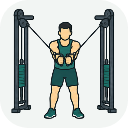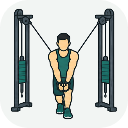
The high cable fly is a fly with both pulleys set above your head, so you sweep your hands down and across toward your waist. That downward arc matches the line the lower chest fibres pull along, which makes it the fly variation people reach for when they want the bottom of the chest rather than the top.
How to do it
- Pulleys above shoulder height, hands meeting low in front of your hips.
- Lean forward slightly so the line of pull matches the direction your chest fibres run.
Common mistakes
- Standing upright, which makes it a straight-arm pulldown for the lats instead.
What it trains
- Chest
- pulls the arms down and across the body, with the lower fibres doing the most
- Front delts
- assist the arms forward, though less than in a shoulder-height fly
- Core
- holds you steady against two cables pulling up and back
Variations and alternatives
Common questions
What is the difference between a high and a low cable fly?
The direction your hands travel, and therefore which part of the chest shortens most. High pulleys mean pulling down and in, which favours the lower chest; low pulleys mean sweeping up and in, which favours the upper. Neither reshapes the muscle on its own, but the emphasis is real.
Where should my hands finish?
Around waist or hip height, in front of your body and close together. Finishing higher turns it into a standard fly, and finishing behind your hips means the chest has stopped working and your triceps are extending instead.
Should I lean forward?
A slight forward lean with a staggered stance, yes. It keeps you balanced against the pull and lines your torso up with the arc your hands are travelling. Leaning so far that you are effectively doing a standing press is too much.
In StackUp. Logged as weight and reps per set, and your heaviest working set decides whether the weight goes up next time. Get the app.
Chest