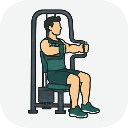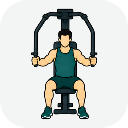
The butterfly, or pec deck, is a seated machine fly: your upper arms are held against pads or handles and you bring them together in front of you with the elbows barely moving. Because the machine holds the arc for you, it is the easiest way to train the chest in its shortening role without the shoulder-stability work a press or a dumbbell fly demands.
How to do it
- Set the seat so your upper arms are level with your chest at the start.
- Keep a small bend in the elbow and hold it — the angle should not change during the rep.
- Squeeze at the point where the handles meet, then come back slowly.
Common mistakes
- Opening too far behind the body chasing a stretch — the shoulder pays for it.
What it trains
- Chest
- brings the upper arms across the body — the only real job in the movement
- Front delts
- assist as the arms come forward, more so if the seat is set low
- Upper back
- holds the shoulder blades against the pad so the chest does the work rather than the arms creeping forward
Variations and alternatives
Common questions
Is the pec deck better than dumbbell flyes?
For safety and for keeping tension at the fully squeezed position, yes. A dumbbell fly loses almost all resistance at the top and is at its hardest with the shoulder stretched wide, which is the position people get sore from. The machine costs you the stabilising work, which is a fair trade if you already press with free weights.
How do I set the seat height?
So the handles or pads sit level with your shoulders and your upper arms are roughly parallel to the floor at the start. If the handles are above shoulder height you will feel it in the front of the shoulder instead of the chest.
Should I touch the handles together at the front?
Get them close, but do not force them to clash. The last few centimetres add very little and most people get there by rounding the shoulders forward, which takes the chest out of it. Hold the squeeze for a beat instead.
Why does my shoulder pinch at the back of the movement?
Usually because you are letting the arms travel further back than the seat position allows, so the shoulder ends up behind the torso line under load. Start the machine on a shorter setting, keep the shoulder blades pinned back, and stop the stretch where you still feel it in the chest rather than the joint.
In StackUp. Logged as weight and reps per set, and your heaviest working set decides whether the weight goes up next time. Get the app.
Chest