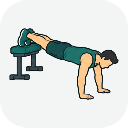
A decline push-up is a push-up with your feet up on a bench or box, which tips more of your bodyweight onto your hands and shifts the press toward the upper chest and front delts. It is the obvious next step when normal push-ups stop being hard, and it needs nothing but a bench.
How to do it
- Feet on a bench, hands on the floor — this loads the upper chest and shoulders.
- Keep your neck neutral rather than craning to look forward.
Common mistakes
- Raising the feet so high it becomes a shoulder press against gravity.
What it trains
- Upper chest
- takes the bulk of the press because the arm path is angled upward relative to your torso
- Front delts
- work noticeably harder than in a flat push-up — the higher your feet, the more they take
- Triceps
- straighten the elbows to finish each rep
- Core
- stops the hips sagging, which gets harder as the feet go higher
Variations and alternatives
Common questions
How high should my feet be?
A standard bench at knee-to-hip height is plenty. Past that the movement slides toward a handstand push-up and the shoulders take almost all of it, which is a different exercise rather than a harder version of this one.
How do I make decline push-ups harder without going higher?
Slow the lowering to three seconds, pause an inch off the floor, or wear a loaded backpack. Adding weight is the honest progression once you are past about fifteen clean reps — more reps beyond that mostly builds endurance.
My hips sag halfway through the set. What am I doing wrong?
Your core is giving out before your chest. Squeeze your glutes hard at the start and hold a straight line from head to heel; if it still sags, drop your feet lower until you can hold the line for every rep. A sagging push-up trains a shorter range and loads your lower back for nothing.
In StackUp. Logged as reps per set. Add weight if you use a belt or a dumbbell and StackUp progresses it like any other lift. Get the app.
Chest