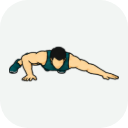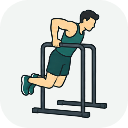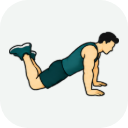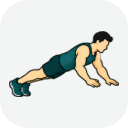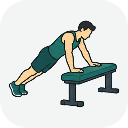
An incline push-up is a push-up with your hands raised on a bench, box or bar, which takes a chunk of your bodyweight off the press. It is the honest way into push-ups for anyone who cannot yet do one from the floor, because the movement is identical — you just pick a height you can do clean reps at and lower it over time.
How to do it
- Hands on a bench or bar. The higher the surface, the easier the rep.
- Keep the same straight line as a floor push-up; only the angle changes.
Common mistakes
- Using a surface so high that the chest stops working at all.
What it trains
- Chest
- presses the body away from the bench, taking less load the higher your hands are
- Triceps
- straighten the elbows to finish each rep
- Front delts
- assist the press and hold the shoulder stable at the bottom
- Core
- keeps a straight line from head to heel — the part most people let slip first
Variations and alternatives
Common questions
How do I progress from incline push-ups to full push-ups?
Lower the surface a step at a time — a high bar, then a bench, then a low box, then the floor. Move down when you can do around fifteen clean reps at the current height. Going straight from a waist-high bench to the floor is where most people stall.
Are incline push-ups easier than knee push-ups?
They are easier to scale and better to build on. A knee push-up shortens your body and changes the core work, so it does not translate one-to-one; an incline keeps the exact position of a real push-up and just reduces the load. You also get infinite intermediate steps with a height, and only one with knees.
Where should my hands be?
Slightly wider than your shoulders, with your elbows tracking back at roughly 45 degrees rather than flaring straight out. Hands too wide shortens the range and puts the shoulder at the end of its rotation with your bodyweight on it.
In StackUp. Logged as reps per set. Add weight if you use a belt or a dumbbell and StackUp progresses it like any other lift. Get the app.
Chest