Weight and reps
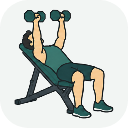
Incline Dumbbell Press
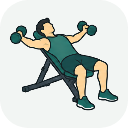
The incline dumbbell press is an upper-chest press with each arm handling its own weight on a bench angled 30 to 45 degrees. Compared to the barbell version you get more range at the bottom and a path your shoulders choose rather than one the bar dictates, which is why a lot of people who find incline benching uncomfortable get on fine with this.
How to do it
- Bench at 30°, dumbbells starting at upper-chest height.
- Lower under control until you feel a stretch, then press without letting your elbows drift back.
Common mistakes
- Letting the dumbbells drift apart at the bottom, which turns the press into a fly.
What it trains
- Upper chest
- drives the press, and gets a deeper stretch than a barbell allows because nothing stops at your chest
- Front delts
- take a large share — more the steeper the bench
- Triceps
- extend the elbows to finish each rep
- Upper back
- stays pinned to the pad so you are not pressing off a soft base
Variations and alternatives
Common questions
What bench angle is best for the upper chest?
Around 30 degrees, and no more than 45. Past that the front delts do most of the work and you are effectively doing a seated shoulder press on a supported back. If your gym's bench only offers steep settings, put one notch of a block under a flat bench instead.
Should I do incline before or after flat pressing?
Whichever you want to improve most goes first, while you are fresh. If your upper chest is the weak point, lead with incline and accept that your flat numbers dip a little on those days.
Should my palms face forward or in?
Forward, or slightly rotated in, is standard and lets you use the most weight. A fully neutral grip with palms facing each other is easier on a cranky shoulder and shifts some load to the triceps — it is a valid option rather than a compromise.
How do I know when to go up in weight?
When your heaviest working set clears the top of your rep range with clean form on both arms. Dumbbells jump in awkward steps, often 2 kg a hand, so expect to sit at one weight for several sessions — StackUp tracks the range and flags the increase when you top it.
In StackUp. Logged as weight and reps per set, and your heaviest working set decides whether the weight goes up next time. Get the app.
Chest