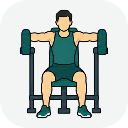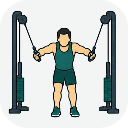
The cable lateral raise runs the same movement off a low pulley, which changes one thing that matters: the tension is constant. A dumbbell is almost weightless at the bottom of the raise and heaviest at the top — a cable pulls the whole way, so the stretched part of the range is actually loaded.
How to do it
- Cable from the low pulley behind you, so tension is constant through the range.
- One arm at a time, with the other hand on the frame for balance.
Common mistakes
- Standing too close, which kills the tension at the bottom.
What it trains
- Side delts
- lift the arm against a pull that never goes slack, bottom to top
- Front delts
- assist, more so if you set the pulley in front of you rather than beside you
- Traps
- stabilise the shoulder blade, and take over the moment you start shrugging
Variations and alternatives
Common questions
Should the cable run in front of my legs or behind my back?
Behind, taken with the far hand across your body, is the version most people find hits the side delt hardest — it starts the arm slightly across the midline so the range is longer. In front of the legs is easier to set up and still fine.
Is a cable lateral raise better than dumbbells?
At loading the bottom of the range, yes, and that is a real advantage. Dumbbells win on convenience and on letting you do both arms at once. Most people get more out of running both, with the cable as the one you take to failure.
Both arms at once or one at a time?
One at a time, normally — the free hand holds the machine so you stop leaning to counterbalance, and you can lean slightly away to get a longer range. Two low pulleys at once works but doubles the setup for no extra benefit.
In StackUp. Logged as weight and reps per set, and your heaviest working set decides whether the weight goes up next time. Get the app.
Shoulders