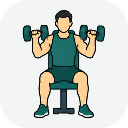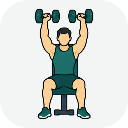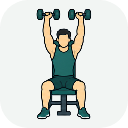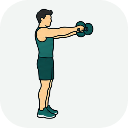
The front raise lifts a dumbbell straight out in front of you to shoulder height, isolating the front delt. It is the most skippable shoulder exercise in most routines — every press you already do hammers the front delt — so it earns a place mainly when you want that one head trained directly.
How to do it
- Raise to eye level with a neutral or overhand grip.
- Keep the torso still — no leaning back to start the lift.
Common mistakes
- Doing them at all when your pressing already covers the front delt heavily.
What it trains
- Front delts
- raise the arm forward — the only muscle really being asked anything
- Upper chest
- assists through the first part of the lift
- Abs
- stop you leaning back to counterweight the load out in front of you
Variations and alternatives
Common questions
Do I even need front raises if I bench and overhead press?
Usually not. The front delt already gets a large share of every pressing set you do, and it is the head most likely to be over-trained rather than under-trained. Add it if your shoulders are visibly lagging at the front, otherwise spend the set on lateral or rear raises.
Barbell, dumbbell or plate?
Dumbbells, most of the time — they let each arm find its own path and let you rotate the palm. A plate held at the edges is the same movement with a more comfortable grip, and a barbell locks both hands into one width, which some shoulders dislike.
Why do I feel front raises in my neck?
You are shrugging the weight up, usually because it is too heavy or because you are rushing. Keep the shoulder blade pulled down, raise slowly, and stop at shoulder height rather than swinging past it.
In StackUp. Logged as weight and reps per set, and your heaviest working set decides whether the weight goes up next time. Get the app.
Shoulders