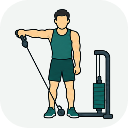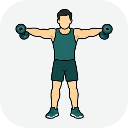
The lateral raise lifts a dumbbell out to the side against gravity, and it is the only common movement that loads the side delt on its own. Pressing builds the front of the shoulder; this is what builds the width, and it works on very light weight because the lever is long.
How to do it
- Lead with the elbows and stop at shoulder height.
- Light weight, slow down. This is the exercise where form beats load most clearly.
Common mistakes
- Swinging the dumbbells up with a hip drive and calling it a raise.
- Going above shoulder height, where the traps take over from the side delts.
What it trains
- Side delts
- lift the arm out from the body — essentially the whole exercise
- Front delts
- take over if the arm drifts forward, which is the usual way this turns into a front raise
- Traps
- assist above shoulder height, and hijack the movement entirely if you shrug
Variations and alternatives
Common questions
How high should I lift on a lateral raise?
To about shoulder height. Above that the traps take over and the side delt is past its best leverage anyway, so the extra range adds shrugging rather than shoulder work.
Why do I feel lateral raises in my traps instead of my shoulders?
Almost always because the weight is too heavy and you are shrugging to move it. Drop to a weight that looks embarrassing, keep the shoulders pulled down, lift with a slight elbow bend, and stop at shoulder height.
How much weight should I use for lateral raises?
Far less than you expect — 5 to 10 kg for a clean set of twelve is normal even for people who press heavy. The side delt is small and the arm is a long lever, so the gap between this and your press means nothing.
Should I pour the dumbbells like a jug at the top?
A slight internal rotation is fine, aggressively tipping them is not. Cranking the thumbs down jams the shoulder at exactly the point where the arm is already at its most awkward, for no extra side delt work.
In StackUp. Logged as weight and reps per set, and your heaviest working set decides whether the weight goes up next time. Get the app.
Shoulders