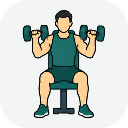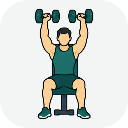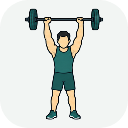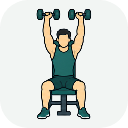
The shoulder press is the general name for pressing a weight from shoulder height to overhead while seated or standing, usually with dumbbells. It is the everyday version of the movement — no strict standing barbell technique to learn, no fixed machine path — and for most people it is the exercise that actually builds the front of the shoulder.
How to do it
- Press straight up with the wrists stacked over the elbows.
- Keep the ribs down so the movement comes from the shoulders, not the lower back.
Common mistakes
- Arching the lower back to finish a rep the shoulders could not.
What it trains
- Front delts
- drive the arms overhead — the prime mover from the first inch
- Side delts
- assist through the middle of the press and take more of it the wider your elbows start
- Triceps
- extend the elbows to finish the rep, and usually fail before the delts do
- Upper back
- holds the torso upright so the press does not turn into a standing incline press
Variations and alternatives
Common questions
Seated or standing shoulder press?
Seated if you want to load the shoulders hardest, standing if you want the trunk involved. A backrest removes the balancing work, so you will press more seated — just do not compare the two numbers, because they are different exercises.
Why is my shoulder press so much weaker than my bench press?
Because it is a smaller muscle doing the work with no leg drive, no arch and no bench behind you. Roughly two thirds of your bench is a common ballpark, and pressing bodyweight overhead is already a strong lift.
How many reps should I do on shoulder press?
Six to twelve works for nearly everyone — the shoulder joint tends to complain about very heavy low-rep overhead work long before the muscle does. Set that range in StackUp and it will suggest more weight the session after your heaviest set tops it.
How far down should I lower the weight?
To roughly chin or ear height, or as deep as you can go without your elbows sliding behind your torso. Going deeper looks like more range but mostly just drags the shoulder into a position where it has no leverage.
In StackUp. Logged as weight and reps per set, and your heaviest working set decides whether the weight goes up next time. Get the app.
Shoulders