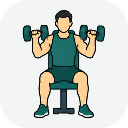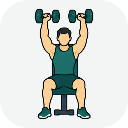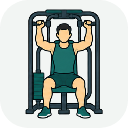
The machine shoulder press runs the overhead press on a fixed path with your back against a pad, which removes the balancing and the trunk work entirely. That is a real trade — you lose what makes the standing press worth doing — but it buys you a pressing movement you can take close to failure with nothing to drop.
How to do it
- Seat height so the handles start level with your shoulders.
- Stay against the backrest for the whole set.
Common mistakes
- Locking out hard and letting the stack drop back onto itself.
What it trains
- Front delts
- the prime mover, and more so here because nothing else is being asked to stabilise
- Triceps
- extend the elbows through the top half of the press
- Side delts
- assist, depending on how wide the machine sets your grip
Variations and alternatives
Common questions
How should I set the seat on a shoulder press machine?
So the handles start level with your shoulders, or a touch below. Too low and you begin in a cramped position with no leverage; too high and you lose the bottom half of the range, which is the part that does most of the work.
Is a machine shoulder press worth doing if I already overhead press?
Yes, as a second movement rather than a replacement. It is the easiest way to add hard shoulder sets when you are already tired from the barbell, because the failure point is just the handles stopping.
Why does my shoulder press machine number not match the dumbbells?
Because machines route the load through a cam and a pivot, and no two makers do it the same way. Even the same weight on a different brand will feel different — log the machine as its own exercise and compare it only with itself.
In StackUp. Logged as weight and reps per set, and your heaviest working set decides whether the weight goes up next time. Get the app.
Shoulders