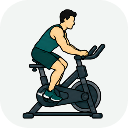
Stationary cycling is cardio with your bodyweight fully supported, so the joints take almost nothing and the legs take everything. That combination makes it the easiest cardio to do a lot of — the one to reach for when you want conditioning volume without adding impact on top of your lifting.
How to do it
- Set the saddle so your knee is almost straight at the bottom of the pedal stroke.
- Push and pull through the whole circle rather than stamping down.
Common mistakes
- A saddle too low, which is the quickest way to make cycling hurt your knees.
What it trains
- Quads
- push the pedal down through the power phase — the main engine of the stroke
- Glutes and hamstrings
- extend the hip and sweep the pedal through the bottom, and take much more of it out of the saddle
- Calves
- stabilise the ankle and add a little push at the bottom of each stroke
- Heart and lungs
- the real target, and the reason the legs are only a means to it
Variations and alternatives
Common questions
How high should the saddle be?
So your knee is slightly bent — roughly 25 to 30° from straight — at the bottom of the stroke. A saddle too low is the usual cause of aching knees on a bike, and one too high rocks your hips side to side. Set it at hip height standing beside the bike as a first guess, then fine tune.
Is cycling bad for building leg muscle?
Not at sensible volumes. Easy riding a few times a week sits alongside leg training without much cost; long hard sessions every day will compete with it, and the effect shows up in your squat before it shows up anywhere else. Keeping hard riding off heavy leg days handles most of it.
Should I use high resistance or high cadence?
Cadence, mostly. Spinning at 80 to 100 rpm against moderate resistance trains the heart and lungs, which is what you came for; grinding a huge gear at 50 rpm is closer to a poor leg workout and leaves your knees taking the difference. Save the heavy resistance for deliberate short intervals.
How long should a cycling session be?
Twenty to sixty minutes for steady work, or fifteen to twenty for intervals including warm-up. Log the duration and distance so you can see the pace change — the same distance in less time is the whole progression on this one.
In StackUp. Logged with a stopwatch that keeps running if you leave the app, plus distance. Get the app.
Cardio