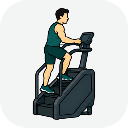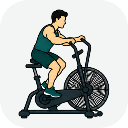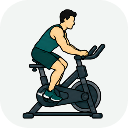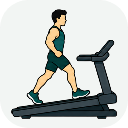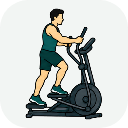
The elliptical drives your feet round a fixed oval path with your feet never leaving the pedals, so there is no impact at all. It is the machine for getting a hard session in when running hurts something, and the moving handles mean your upper body can share the load if you let it.
How to do it
- Stand upright and let go of the rails so the legs do the work.
- Add resistance rather than speed when it starts feeling easy.
Common mistakes
- Leaning on the handles, which is how a session burns far less than the display claims.
What it trains
- Quads
- extend the knee through the front of each stride
- Glutes
- push the pedal back and down, and do far more of the work as the ramp goes up
- Hamstrings and calves
- sweep the pedal through the back of the stroke
- Heart and lungs
- the actual training target — everything else is just how the machine gets at them
Variations and alternatives
Common questions
Is the elliptical as good as running?
For heart and lung fitness, yes if you work as hard on it. What it does not give you is the impact loading and the specific stride mechanics of running, so it does not prepare you for a race — but as conditioning that leaves your knees alone, it is a straight substitute.
Should I hold the handles or let go?
Let go for most of it. Holding the fixed rails lets you lean on them and quietly take load off your legs, which flatters the machine's numbers and does less for you. Use the moving handles deliberately when you want the upper body involved, and keep your hands off the static ones.
Why does the elliptical say I burned so many calories?
Because it is guessing from your effort and a generic body weight, and these machines tend to guess high. Use the figure as a consistent measure of work on that specific machine rather than a real calorie count, and compare it only with your own past sessions.
In StackUp. Logged with a stopwatch that keeps running if you leave the app, plus distance. Get the app.
Cardio