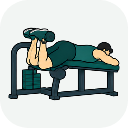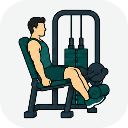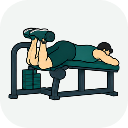
This is the general hamstring machine slot — whichever leg curl your gym has, lying, seated or standing. If you know which one you use, log that instead; this entry exists so a hamstring machine you cannot name still gets tracked rather than skipped.
How to do it
- Curl by pulling the heel toward the glute, not by lifting the hips.
- Lower slowly — the hamstring builds most on the way back.
Common mistakes
- Lifting the hips off the pad to finish the last reps.
What it trains
- Hamstrings
- bend the knee against the pad — the movement exists for this and nothing else
- Calves
- assist at the knee, more so if you let your toes point away from you
- Glutes
- hold the hip still so the curl stays a knee movement
Variations and alternatives
Common questions
Do I need direct hamstring work if I already squat and deadlift?
Yes, if you want the hamstrings to grow. Squats barely load them, and deadlifts and RDLs work them at the hip while the knee stays fixed — a curl is the only common movement that trains knee flexion, which is half of what they do.
Why do I get cramp in my hamstrings on leg curls?
Very common, and usually just the muscle being worked at a short length in a position it rarely visits. Shorten the range slightly at the top, slow the reps down, and it normally settles within a few sessions as you get used to the machine.
How many sets of hamstring work per week?
Somewhere between six and twelve hard sets across the week suits most people, split over two sessions. Pair one knee-flexion movement like a curl with one hip movement like an RDL rather than doing three variations of the same thing.
In StackUp. Logged as weight and reps per set, and your heaviest working set decides whether the weight goes up next time. Get the app.
Legs