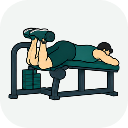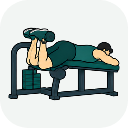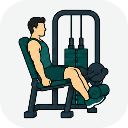
The seated leg curl has you sitting with a pad over your thighs, curling the roller down and under. Sitting flexes the hip, which holds the hamstrings at a longer length for the whole set than the lying version manages — that stretch under load is the reason most people pick this one when the gym has both.
How to do it
- The seated version stretches the hamstring more than the lying one — go a bit lighter.
- Keep your back against the pad and curl through the full range.
Common mistakes
- Sliding forward in the seat, which shortens the range without you noticing.
What it trains
- Hamstrings
- bend the knee from a hip-flexed position, so they work stretched throughout — the prime mover
- Calves
- assist across the knee, particularly if the toes point away from you
- Abs
- keep you pinned into the seat instead of sliding forward under the thigh pad
Variations and alternatives
Common questions
How do I set up the seated leg curl machine?
Back flat against the pad, knee joint level with the machine's pivot, and the roller across your achilles rather than up on your calf. Then clamp the thigh pad down hard — if it is loose, your legs lift with the weight and you lose the bottom of the range.
Why do I feel seated leg curls more than lying ones?
Because sitting bends the hip, which puts the hamstrings on stretch before you start curling. A muscle loaded at a long length generally feels harder at the same weight, and that is also why most people can use less here.
Should I do leg curls before or after squats?
After, on a normal leg day. Curls are cheap to recover from and squats are not, so doing them first means your main lift suffers for an accessory. The exception is if hamstrings are your priority for a block, in which case lead with them.
In StackUp. Logged as weight and reps per set, and your heaviest working set decides whether the weight goes up next time. Get the app.
Legs