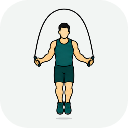
Jump rope is conditioning in a square metre of floor: a rope, and small repeated jumps off the balls of your feet. It gets your heart rate up quickly, it costs almost nothing, and the calf and ankle stiffness it builds is the part people notice carries over to running.
How to do it
- Turn the rope from the wrists, not the shoulders.
- Small jumps — a couple of centimetres is enough to clear the rope.
Common mistakes
- Jumping high and swinging the whole arm, which tires you out in a minute.
What it trains
- Calves
- do nearly all of the jumping and absorb every landing — this is the muscle that will be sore tomorrow
- Quads
- absorb the landings and add a little drive on higher jumps
- Forearms and shoulders
- turn the rope from the wrists, and burn if you swing the whole arm instead
- Heart and lungs
- the actual target — a rope gets you there faster than almost anything else portable
Variations and alternatives
Common questions
What length should my skipping rope be?
Stand on the middle of it and the handles should reach roughly to your armpits. Longer is slower and forgiving while you learn; shorter is faster and much less tolerant of a sloppy jump. Most decent ropes are adjustable, so set it once and leave it.
How do I stop tripping on the rope?
Turn it with your wrists rather than your arms, keep your elbows close to your sides, and jump barely an inch off the floor. Most tripping is either jumping far too high and landing late, or swinging from the shoulders so the rope arrives at an inconsistent speed.
Are my calves supposed to be this sore?
The first few sessions, yes — jumping puts the calves and Achilles under a lot of repeated load that little else does. Build up in short bouts of thirty seconds rather than trying to skip for ten minutes on day one, and give it a couple of days between sessions at the start.
In StackUp. Logged with a stopwatch that keeps running if you leave the app. Get the app.
Cardio