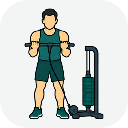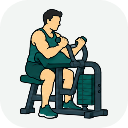
A curl machine pins your upper arms to a pad and runs the weight on a cam, so the resistance is shaped to match where your biceps are strong and there is no balancing to do at all. That makes it the easiest curl to take to genuine failure, because failing means the pad stops moving rather than a dumbbell landing on your foot.
How to do it
- Set the seat so your elbows line up with the machine pivot.
- Full range, and let the weight come back slowly.
Common mistakes
- Lifting the elbows off the pad on the last reps.
What it trains
- Biceps
- the prime mover, with the elbow held in one place by the machine
- Brachialis
- assists through the range, as in every elbow flexion movement
- Forearms
- grip the handles, though far less than on a free weight
Variations and alternatives
Common questions
Is a curl machine worth using if I have dumbbells?
As a second biceps exercise, yes — it is the safest place to push a set past the point where form would go on a free weight. As your only one, it is a slight downgrade: the machine holds your arm in position, so nothing else learns to.
How do I set the seat?
High enough that your armpits sit against the top of the pad and your upper arms lie flat along it. If your shoulders are shrugged up to reach, the seat is too low, and you will end up pulling with your back.
The weight feels easy at the bottom and impossible at the top — is that normal?
Yes, that is the cam doing its job, and how much you notice it depends entirely on the machine. It is also why the number on one maker's curl machine means nothing on another's — log each machine as its own exercise and only compare it with itself.
In StackUp. Logged as weight and reps per set, and your heaviest working set decides whether the weight goes up next time. Get the app.
Arms