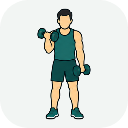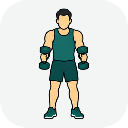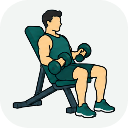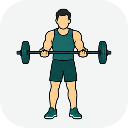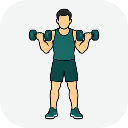
The biceps curl is the whole family in its plainest form: elbows at your sides, weight up, weight down, with whatever implement is to hand. Every other curl on this list is this one with something removed or pinned down, so it is the one to log first and the sensible default when you just want biceps work without picking a fight about technique.
How to do it
- Elbows pinned, full range, and a pause at the top.
- Lower slower than you lift — that half of the rep builds most of the arm.
Common mistakes
- Cutting the bottom half, which is where the biceps is stretched and working hardest.
What it trains
- Biceps
- bend the elbow and rotate the palm up — the prime mover
- Brachialis
- the flexor underneath, and the one that adds visible thickness to the upper arm
- Forearms
- grip the weight and stabilise the wrist through the curl
Variations and alternatives
Common questions
How many sets of curls should I do a week?
Somewhere between six and twelve hard sets, including what your back work already gives the biceps. Rows and pulldowns train them properly, so arms that never seem to grow are more often under-recovered than under-trained.
Should I fully straighten my arms at the bottom?
Yes, unless a joint objects. The stretched position is where a lot of the growth stimulus sits, and stopping halfway down is usually just a way to keep a weight moving that is too heavy. Straight at the bottom, no bounce out of it.
Do curls make your arms bigger, or is it triceps?
Triceps, mostly — they are the larger of the two and make up the bulk of the upper arm. Curls still matter for the shape of the front, but if arm size is the goal and you only have time for one, press and extend rather than curl.
In StackUp. Logged as weight and reps per set, and your heaviest working set decides whether the weight goes up next time. Get the app.
Arms