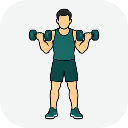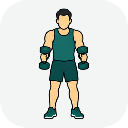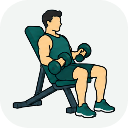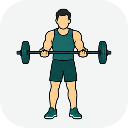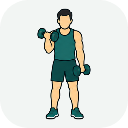
The dumbbell curl gives each arm its own weight, so a strong side cannot cover for a weak one and each wrist rotates freely through the rep instead of being locked by a bar. It is the curl most people should do most of the time, and the one where a left-right difference finally becomes visible.
How to do it
- Supinate as you curl — turn the palm up, which is what the biceps actually does.
- Alternate or both at once; just keep the elbows still either way.
Common mistakes
- Shrugging at the top to squeeze out one more.
What it trains
- Biceps
- bend the elbow and supinate the forearm — both jobs, which a fixed bar denies them
- Brachialis
- works throughout and does not care which way the palm faces
- Forearms
- control the rotation of the dumbbell and hold it level
- Front delts
- take over the moment the elbows come forward, which is the most common way this gets cheated
Variations and alternatives
Common questions
Should I curl both arms at once or alternate?
Both at once if you want the set over with and the torso braced hard; alternating if you want to watch each rep and give each arm a breather. Alternating lets you use slightly heavier dumbbells for the same rep count, which is worth knowing before you compare the two numbers.
One of my arms is noticeably weaker — what do I do?
Do the weaker arm first, take its rep count as the number, and match it with the strong arm rather than pushing the strong one to failure. Chasing extra reps on the good side is how the gap stays where it is. Small differences are normal and never fully disappear.
Why do my elbows ache after dumbbell curls?
Usually the bottom of the rep — snapping into a locked-out elbow at speed with a heavy dumbbell loads the tendon hard at its worst angle. Slow the last part of the lowering, stop just short of a hard lock, and drop the weight for a couple of weeks.
In StackUp. Logged as weight and reps per set, and your heaviest working set decides whether the weight goes up next time. Get the app.
Arms