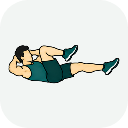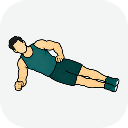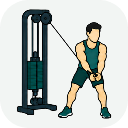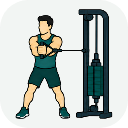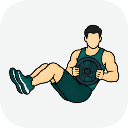
The Russian twist sits you on the floor leaning back, rotating a weight from hip to hip while the feet hover or rest. It trains rotation under load, which almost nothing else in a normal gym routine does, and it works far better slow and heavy than fast and light.
How to do it
- Lean back to a stable angle and rotate from the ribs, not the arms.
- Touch the floor beside you only if you can do it without collapsing.
Common mistakes
- Swinging a weight side to side while the torso stays still.
What it trains
- Obliques
- turn the ribcage against the load on each side — the prime mover
- Abs
- hold the lean-back position, which is what makes the set hard rather than the twisting
- Hip flexors
- keep the legs up if you lift the feet off the floor
Variations and alternatives
Common questions
Should my feet be off the floor for Russian twists?
Only once you can do the movement cleanly with them down. Lifting the feet mostly makes the hip flexors and your balance the limiting factor, not the obliques. Heels down and a heavier weight is usually the better set.
How far should I twist?
Until your shoulders are genuinely turned, not until the weight taps the floor. Most people swing the arms side to side while the torso stays square — if the ribcage is not rotating, the obliques are doing nothing.
Do Russian twists give you a smaller waist?
No — trained obliques get thicker, not narrower, and waist size comes down to body fat and skeletal proportions. Do them because you want rotational strength, which is a good enough reason on its own.
In StackUp. Logged as reps per set. Add weight if you use a belt or a dumbbell and StackUp progresses it like any other lift. Get the app.
Core