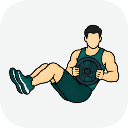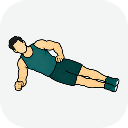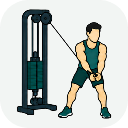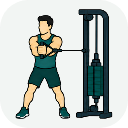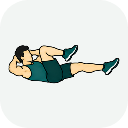
The bicycle crunch alternates elbow to opposite knee while the other leg extends, so every rep combines a crunch with a rotation. It is the standard bodyweight movement for the obliques, and its weakness is that it is very easy to do fast and badly — the range collapses long before the muscle is tired.
How to do it
- Slow and deliberate, rotating from the ribs rather than swinging the elbows.
- Keep the lower back flat on the floor throughout.
Common mistakes
- Going fast, which turns a rotation exercise into flapping.
What it trains
- Obliques
- rotate the ribcage towards the opposite hip — what the exercise is for
- Abs
- hold the shoulders off the floor throughout, which is where most of the burn comes from
- Hip flexors
- drive the knee in and hold the extended leg off the floor
Variations and alternatives
Common questions
How fast should I do bicycle crunches?
Slowly — a second or two per side, with a pause when the elbow and knee are closest. Speed lets momentum swing the legs and turns a rotation exercise into flailing, and it is the single most common reason people feel nothing in the obliques.
Should my elbow actually touch my knee?
No, and chasing the touch is what makes people yank on their neck. Rotate the shoulder towards the opposite knee and stop where the rotation stops; if the elbow arrives, it is because the twist got you there.
How low should the extended leg go?
As low as you can keep your lower back pressed to the floor. Lower is harder, and the moment your back arches you have gone past your range — raise the leg angle a little and the abs stay in charge.
In StackUp. Logged as reps per set. Add weight if you use a belt or a dumbbell and StackUp progresses it like any other lift. Get the app.
Core