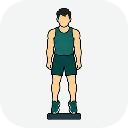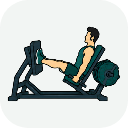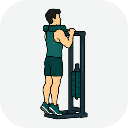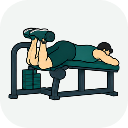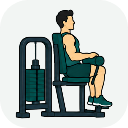
The seated calf raise has you press up with the pad across your knees and your legs bent at about 90°. That bent knee takes the gastrocnemius largely out of it and leaves the soleus underneath doing the work — which is the one meaningful reason to do this instead of any standing calf raise.
How to do it
- Seated bends the knee, which shifts the work to the soleus underneath the calf.
- Same full range and pause as the standing version.
Common mistakes
- Loading the pad so heavily that the range collapses.
What it trains
- Calves
- extend the ankle, with the soleus taking most of the load because the bent knee shortens the muscle above it
- Feet and toes
- bear the whole load on the forefoot through the top of each rep
Variations and alternatives
Common questions
What is the point of seated calf raises if I already do standing ones?
The bent knee shifts the work to the soleus, the flatter muscle under the gastrocnemius, which standing raises barely load. It contributes real thickness to the lower calf, so running one of each is a reasonable way to cover both.
Why can I lift so much less than on a standing calf machine?
Because the soleus is smaller than the gastrocnemius and you are not bracing your bodyweight through the movement. The numbers between the two machines are not comparable and there is no reason to expect them to be.
How long should I pause at the bottom?
A full second, with the heel dropped as far as the machine allows. Bouncing out of the bottom uses the achilles as a spring and skips the part of the range the exercise is for.
In StackUp. Logged as weight and reps per set, and your heaviest working set decides whether the weight goes up next time. Get the app.
Legs