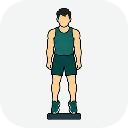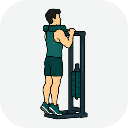
The standing calf raise loads the calf with your knee straight, which is the position where the gastrocnemius — the visible muscle that gives the calf its shape — does most of the work. Whether it is a shoulder-pad machine or a dumbbell on a step, the straight leg is what defines it and what separates it from the seated version.
How to do it
- Full range: drop the heel below the step, then rise all the way onto the toes.
- Pause at the top. Calves respond to time under tension more than to bouncing.
Common mistakes
- Short, fast reps that use the tendon instead of the muscle.
What it trains
- Calves
- extend the ankle with the gastrocnemius leading, because the straight knee keeps it long
- Abs and lower back
- hold you upright under a load sitting on your shoulders
- Feet and toes
- balance the whole load on the forefoot at the top of each rep
Variations and alternatives
Common questions
Do I need a step or a block under my feet?
Yes, or the machine's own platform. Standing flat on the floor removes the bottom half of the range, which is the half that involves a stretch — the drop below level is most of what makes the exercise work.
Should I bounce the reps?
No. The achilles stores and returns elastic energy, so bouncing means the tendon is doing what you want the muscle to do. Pause at the bottom for a count and the set gets considerably harder at the same weight.
Can I train calves every day?
You can train them often — three or four times a week is fine and calves recover quickly — but every day with hard sets is usually more than they need. Frequency helps here more than it does on most muscles, which is worth knowing if yours are stubborn.
How do I actually progress calf raises?
The same way as anything else: hit the top of a rep range on your heaviest set, then add weight. Calves are where people drift for years at the same load because every set feels much the same — this is the exercise where StackUp marking it up and suggesting the next weight earns its keep most.
In StackUp. Logged as weight and reps per set, and your heaviest working set decides whether the weight goes up next time. Get the app.
Legs