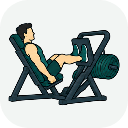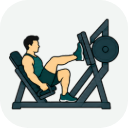
The single-leg press is the leg press done one leg at a time: one foot on the platform, the other resting on the frame or the floor. The machine does the balancing, so each leg works on its own under a real load — the simplest way to train each side separately without balance ending the set, as it often does in split squats.
How to do it
- Put one foot on the platform in line with that hip, and rest the other on the frame or the floor.
- Lower until the knee reaches about 90°, keeping it over your toes and your hips flat on the seat.
- Press back up without locking the knee; finish all your reps, then switch legs.
Common mistakes
- Letting the hips twist, or the working-side hip lift off the pad, as you go deep.
- Loading close to your two-legged weight and cutting the range short to move it.
What it trains
- Quads
- extend the knee of the working leg against the platform — the prime mover
- Glutes
- extend the hip, and take more of the work the higher your foot sits on the platform
- Hamstrings
- assist at the hip and help hold the knee steady
- Abductors
- stop the knee drifting inward, with no second leg to share the job
Variations and alternatives
Common questions
Do I log both legs?
No — log the reps of one leg. Do the same set on the other side, but enter it once, with one leg's reps and the weight on the machine; if one side falls short, enter that side's count. StackUp judges that number against your rep range, so it has to mean one leg, not both added together.
How much weight should I use on the single-leg press?
Start at about a third of what you press with both legs and work up from there. The first sessions are for finding a foot position where the knee tracks cleanly and the hips stay put; after that, StackUp suggests the next weight whenever your heaviest set tops your rep range.
Is the single-leg press as good as Bulgarian split squats?
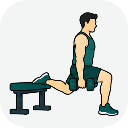
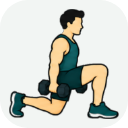
For loading one leg hard, yes, and it is easier to take close to failure because balance never ends the set. The split squat trains the balance and hip control the machine takes away, so if you have room for both, they complement each other rather than compete.
Where should my foot go on the platform?
In line with the hip of the working leg rather than in the middle of the platform, and high enough that the knee reaches about 90° without your lower back lifting off the pad. A foot placed in the centre angles the knee inward from the first rep.
In StackUp. Logged as weight and reps per set, and your heaviest working set decides whether the weight goes up next time. Get the app.
Legs