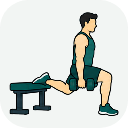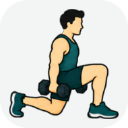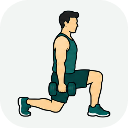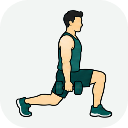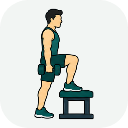
The step-up is stepping onto a box or bench with one leg and standing up on it, with the other leg doing nothing. It is the single-leg movement with the least eccentric load — you lower yourself back down gently rather than catching your weight — which makes it much easier to recover from than lunges and split squats.
How to do it
- Box height so your thigh is about parallel when the foot is on it.
- Drive through the top foot and do not push off the floor with the trailing leg.
Common mistakes
- Bouncing off the bottom leg, which is the whole exercise skipped.
What it trains
- Quads
- extend the knee of the leg on the box to lift your whole bodyweight
- Glutes
- extend the hip, and take much more of it the higher the box
- Hamstrings
- assist the hip and control the way back down
- Calves
- stabilise the ankle and finish the drive at the top
Variations and alternatives
Common questions
How high should the box be?
High enough that your thigh is roughly parallel to the floor when your foot is on it. Lower than that and it is barely an exercise; much higher and your back leg starts pushing off the floor to help, which is the thing that makes step-ups pointless.
Am I cheating if I push off my back foot?
Yes, and almost everyone does it without noticing. The fix is to keep your trailing toe lightly touching the floor for balance only, or to start each rep with the back foot already lifted so it cannot contribute.
Should I step back down or step down the other side?
Step back down to where you started, under control, with the working leg lowering you. Hopping off is how step-ups turn into a cardio drill, and the slow descent is a real part of the work.
In StackUp. Logged as weight and reps per set, and your heaviest working set decides whether the weight goes up next time. Get the app.
Legs