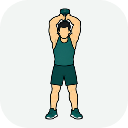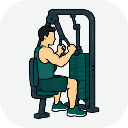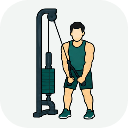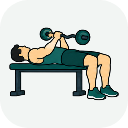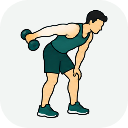
The kickback holds the upper arm parallel to the floor behind you and straightens the elbow, so the triceps are fully shortened at the end of the rep and the resistance is highest exactly there. It is a light movement by nature — the lever is long and there is nowhere to cheat — which makes it a finisher rather than a lift you build arms on.
How to do it
- Upper arm parallel to the floor and fixed; extend from the elbow only.
- Squeeze at full extension, which is where the tension actually is.
Common mistakes
- Swinging the dumbbell back rather than extending the arm.
What it trains
- Triceps
- extend the elbow to a full lockout, hardest at the very end of the rep
- Rear delts
- hold the upper arm up behind you for the whole set
- Lower back
- holds the bent-over position, which is often what ends the set on the free-weight version
Variations and alternatives
Common questions
Are triceps kickbacks a waste of time?
Not a waste, but they are the least loadable triceps movement you can pick. With a dumbbell the tension nearly vanishes at the bottom and you can barely use any weight, so they belong at the end of a session after pushdowns or extensions, not instead of them.
Are cable kickbacks better than dumbbell kickbacks?
Yes, noticeably. A cable keeps tension through the whole range where a dumbbell goes light as the forearm drops, and you can stand rather than hold a bent-over position. If there is a free low pulley, use it.
Should my upper arm move at all?
No — it stays parallel to the floor and only the forearm moves. Swinging the whole arm up at the top makes the number go up and the triceps work go down, which is the single most common thing wrong with this exercise.
In StackUp. Logged as weight and reps per set, and your heaviest working set decides whether the weight goes up next time. Get the app.
Arms