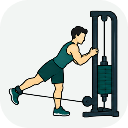
The cable kickback is single-leg hip extension against a cable, with an ankle strap and one leg at a time. It is the only common glute exercise where the tension does not drop off at the top, which is what makes it useful after the heavy work rather than instead of it.
How to do it
- Ankle strap low, torso braced, and extend the hip straight back.
- Stop where the hip is extended rather than where the back arches.
Common mistakes
- Swinging the leg high and calling the arch extra range.
What it trains
- Glutes
- extend the hip against the cable — the whole point of the movement, and worked one side at a time
- Hamstrings
- assist at the hip, more so if you let the knee bend as you kick back
- Lower back
- holds the torso still — the muscle that usually takes over when the weight is too heavy
Variations and alternatives
Common questions
How high should I kick the leg?
Until your hip is straight and no further. Anything past that comes from arching your lower back, not from the glute, and it is the single most common thing people get wrong here. If your torso rocks on every rep, drop the weight.
Is a cable better than a resistance band for kickbacks?
Yes, for one specific reason — the cable gives you the same load through the whole range while a band gets hardest only at the end. A band is fine at home and genuinely convenient, but you cannot add two and a half kilos to it next week.
Should I lean forward on kickbacks?
A small forward lean is fine and lengthens the glute at the bottom, as long as your spine stays in one line and it is the same lean every rep. Leaning further as the set gets hard is not a technique, it is the set ending.
In StackUp. Logged as weight and reps per set, and your heaviest working set decides whether the weight goes up next time. Get the app.
Glutes