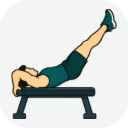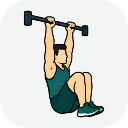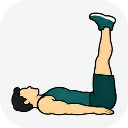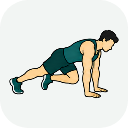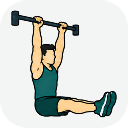
The hanging leg raise is the knee raise with straight legs, which roughly doubles the lever and makes it one of the hardest bodyweight ab exercises there is. Done properly it finishes with the pelvis curled up, not just the legs at hip height — everything below that is hip flexor work with a long lever.
How to do it
- Same as the knee raise with straight legs — considerably harder.
- Lower slowly; the way down is where control is lost.
Common mistakes
- Straightening the legs before you can control the knee version.
What it trains
- Abs
- curl the pelvis towards the ribs at the top — the part that makes it an ab exercise
- Hip flexors
- raise the straight legs from hanging to horizontal
- Lats
- keep you from swinging and hold the shoulders packed under load
- Grip and forearms
- support your whole bodyweight for the length of the set
Variations and alternatives
Common questions
How high do I need to raise my legs?
Past horizontal, with the hips curling up under you. Stopping at parallel is the common version and it leaves the abs almost untouched — if you can only get to parallel with straight legs, bend the knees a little and go higher instead.
Straight legs or bent knees?
Bent until you can control the full range, then straighten. The straight-leg version is not a better exercise, just a harder one, and a clean knee raise beats a swinging leg raise every time.
How do I progress hanging leg raises once they get easy?
Hold a dumbbell between your feet, or slow the lowering down to four or five seconds. Both add load in a way that more reps does not, and a light dumbbell makes a bigger difference here than you would expect.
In StackUp. Logged as reps per set. Add weight if you use a belt or a dumbbell and StackUp progresses it like any other lift. Get the app.
Core