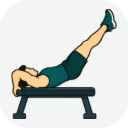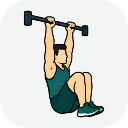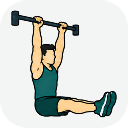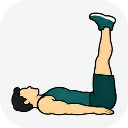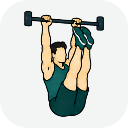
Toes-to-bar takes the hanging leg raise all the way to the bar, so your feet finish above your hands. It is as much a lats and coordination movement as an ab one — getting the toes that high needs you to pull yourself back under the bar, which is why a strict rep is far harder than the kipping version most people see.
How to do it
- Start from a hollow hang and bring the toes to the bar in one motion.
- Control the descent rather than dropping and re-swinging.
Common mistakes
- Kipping so hard the abs barely participate.
What it trains
- Abs
- curl the pelvis and spine to bring the feet past hip height
- Hip flexors
- raise the legs through the first half of the movement
- Lats
- pull your torso back and keep the hips under the bar — the reason a strict rep is possible at all
- Grip and forearms
- hold the bar for the whole set, which is usually the practical limit
Variations and alternatives
Common questions
How do I get my first toes-to-bar?
Build the strict hanging leg raise until you can hold your legs above parallel under control, then practise pulling down on the bar with straight arms at the same time as the legs come up. That lat pull is the piece most people are missing, not ab strength.
Is kipping toes-to-bar worth doing?
If you train for conditioning workouts where speed matters, yes — it is a different skill with its own timing. If you are training abs, the strict version does far more per rep. Do not mix the two in one set and expect the numbers to mean anything.
Do my toes have to actually touch the bar?
For the movement as named, yes, and most people cannot get there with straight legs without some mobility at the hamstrings. Bending the knees slightly to reach the bar is a reasonable version and still trains everything that matters.
In StackUp. Logged as reps per set. Add weight if you use a belt or a dumbbell and StackUp progresses it like any other lift. Get the app.
Core