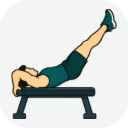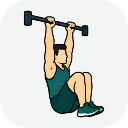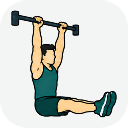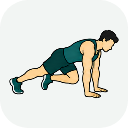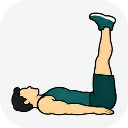
The lying leg raise puts you flat on your back and lifts both legs from the floor to vertical. It is the hanging version without the grip and shoulder demands, so the abs and hip flexors get the whole set — and the lower part of the range is where the work is, which makes the floor a useful reference for form.
How to do it
- Hands under the hips, lower back pressed into the floor.
- Lower the legs only as far as you can keep the back flat.
Common mistakes
- Letting the lower back arch off the floor, which puts the load on the spine.
What it trains
- Abs
- stop the lower back arching as the legs come down — the hardest part of every rep
- Hip flexors
- raise the legs, and take most of the lifting half of the movement
- Obliques
- keep the legs travelling together rather than drifting apart
Variations and alternatives
Common questions
Why does my lower back arch on leg raises?
Because the legs are going lower than your abs can hold. Stop the descent at the point your back starts lifting, or slide your hands under your hips for support, and lower further as you get stronger.
Should my legs touch the floor between reps?
No, if you can help it. Stopping a few centimetres short keeps the tension on and stops you resting at the bottom, which is where the set would otherwise get easy.
Are lying leg raises as good as hanging ones?
Not quite — hanging gives a longer range and lets the pelvis curl at the top, which is the most direct ab work in either version. Lying is the better option if your grip or shoulders are the limit, and it is much easier to do a lot of volume on.
In StackUp. Logged as reps per set. Add weight if you use a belt or a dumbbell and StackUp progresses it like any other lift. Get the app.
Core