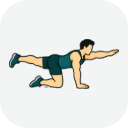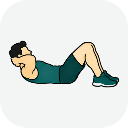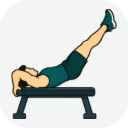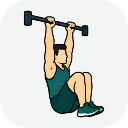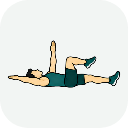
The dead bug has you flat on your back with arms and knees up, lowering one arm and the opposite leg while the lower back stays pressed into the floor. Nothing about it looks difficult, and the whole exercise is the part you cannot see: keeping the spine still while the limbs move.
How to do it
- Lower the opposite arm and leg while keeping the back pressed to the floor.
- Breathe out as you extend — holding your breath hides a loss of position.
Common mistakes
- Going fast. The whole point is keeping the spine still while the limbs move.
What it trains
- Abs
- stop the lower back arching off the floor as the limbs extend away
- Obliques
- resist the twist that comes from moving opposite limbs at once
- Hip flexors
- hold the non-moving leg in place at 90°
Variations and alternatives
Common questions
How do I know if I am doing dead bugs right?
Put a hand under your lower back before you start. If the gap opens as the leg goes down, you have gone past your range — bring it back up and lower less far. The point at which your back lifts is your working range.
How fast should dead bugs be?
Slow. Three or four seconds out, the same back, breathing out as the limbs extend. Fast dead bugs use momentum to move the arms and legs, which removes the only difficulty in the exercise.
How do I make dead bugs harder?
Extend the limbs further and lower, hold the bottom position for a second, or hold a light weight in each hand. Adding reps is the least useful option — a set of thirty is a sign the leverage is too easy, not that you are strong.
In StackUp. Logged as reps per set. Add weight if you use a belt or a dumbbell and StackUp progresses it like any other lift. Get the app.
Core