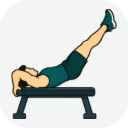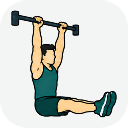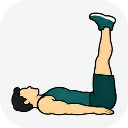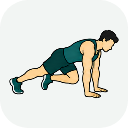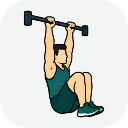
The hanging knee raise has you hanging from a bar and pulling your knees up towards your chest. Bent knees make the lever short, which is what separates it from the straight-leg version — it is the entry point to hanging ab work, and the place to learn to lift with the abs rather than swing.
How to do it
- Hang with active shoulders and raise the knees past the hips.
- Tilt the pelvis up at the top — that is what makes it an ab exercise.
Common mistakes
- Swinging between reps and using the momentum.
What it trains
- Abs
- curl the pelvis up at the top of each rep — the part people skip
- Hip flexors
- raise the thighs, and do most of the work until the pelvis starts to tuck
- Grip and forearms
- hold you on the bar, and often end the set before the abs do
- Lats
- keep the shoulders packed so you hang stable rather than swinging
Variations and alternatives
Common questions
How do I stop swinging on hanging knee raises?
Pull your shoulder blades down before the first rep and keep tension in your lats the whole set, then lower slowly instead of dropping. Most swinging is caused by the way you come down, not the way you go up.
Why do I only feel hip flexors on knee raises?
Because you are stopping at 90°, which is where the hip flexors finish and the abs have not started. Keep going past that point and curl your hips up so your lower back rounds slightly — that last part is the ab work.
What if my grip gives out first?
Use straps, or use a captain's chair with elbow pads. Neither is cheating — the exercise is for your abs, and letting your forearms decide when the set ends means the abs never get trained.
In StackUp. Logged as reps per set. Add weight if you use a belt or a dumbbell and StackUp progresses it like any other lift. Get the app.
Core