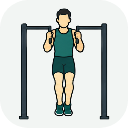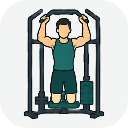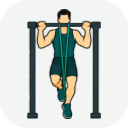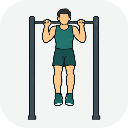
The pull-up is the overhand vertical pull: hang from a bar and pull your chin over it. It is the hardest of the three grips because the biceps are in their weakest position, which leaves the lats doing more of the work than anywhere else — and unlike a pulldown, your bodyweight is the weight, so the exercise gets harder as you gain mass and easier as you get stronger.
How to do it
- Start from a dead hang with the shoulders active, not slack.
- Pull your elbows down to your sides and bring your chest toward the bar.
Common mistakes
- Kipping to get extra reps while calling them strict ones.
- Stopping halfway down, which skips the part that builds the strength.
What it trains
- Lats
- pull the upper arms down and in — the prime mover, with less help here than on any other grip
- Upper back
- retracts and depresses the shoulder blades to start the pull
- Biceps
- bend the elbows from a pronated grip, which is their weakest position
- Core
- holds the body still so the rep is a pull and not a swing
- Forearms
- hold you on the bar, and often decide the last rep of a heavy set
Variations and alternatives
Common questions
How do I get my first pull-up?
Slow negatives plus assisted reps, three times a week. Jump to the top and lower over five seconds for three or four singles, then do a set of assisted or inverted rows for volume. Most people who are already training get there in six to ten weeks.
Should my chin clear the bar or my chest touch it?
Chin over the bar is the standard and is enough. Chest-to-bar is a harder rep with more upper-back involvement, worth doing if you can, but stopping short of a chin-clearing rep to add weight is the wrong trade.
How do I progress pull-ups once bodyweight gets easy?
Add weight with a dip belt rather than chasing higher reps. Once you are at about 12 clean reps, hanging 5 kg and dropping back to sets of 6 keeps the lift in a range that builds strength. StackUp tracks added weight on bodyweight exercises, so the up mark still fires when you top your range.
Are kipping pull-ups worth doing?
Only if you compete in something that scores them. A kip converts the exercise from a back movement into a whole-body skill; it lets you do far more reps but each one asks less of the lats, which is the opposite of what most people are here for.
In StackUp. Logged as reps per set. Add weight if you use a belt or a dumbbell and StackUp progresses it like any other lift. Get the app.
Back