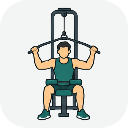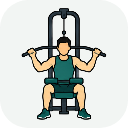
The wide-grip pulldown takes the bar well outside shoulder width, which shortens the pull and cuts the biceps down to a smaller role — the lats and upper back end up doing a bigger share of a smaller range. It is the pulldown people reach for when chasing width, and the shorter stroke means the weight is usually lower than on a close grip.
How to do it
- Grip a little wider than shoulder width — wider is not better past a point.
- Think about driving the elbows down rather than pulling with the hands.
Common mistakes
- Gripping so wide the range collapses to a few centimetres.
What it trains
- Lats
- pull the upper arms down and in from a wide starting position
- Upper back
- retracts the shoulder blades, and takes more of the work than on a close grip
- Biceps
- assist from a weaker, pronated and abducted position
- Rear delts
- help pull the elbows down and back
Variations and alternatives
Common questions
How wide should a wide-grip pulldown be?
About one and a half times shoulder width, so your forearms are roughly vertical at the bottom of the pull. Going to the very ends of the bar shortens the range further without adding anything and puts the shoulder in an awkward spot.
Does wide grip actually build a wider back?
Not by itself. Width comes from lat size, and lat size comes from training them hard through a full range for a long time. A wide grip shifts the emphasis a little toward the upper back; it does not change where the muscle grows.
How many reps should I do on pulldowns?
Eight to fifteen. The shortened range makes heavy triples a poor fit, and the lats respond well to the extra volume. Set the range in StackUp and it will tell you to add weight the session after your heaviest set tops it.
Why do my forearms give out before my lats?
The wide pronated grip is the weakest one for holding a bar, so grip fails early on higher-rep sets. Straps fix it outright, and using them on pulldowns is not controversial — the exercise is not there to train your hands.
In StackUp. Logged as weight and reps per set, and your heaviest working set decides whether the weight goes up next time. Get the app.
Back