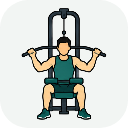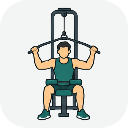
The lat pulldown is the seated cable version of a pull-up, and the most useful vertical pull for anyone who cannot yet do bodyweight reps — the load is whatever you set, so you can train the pattern properly from day one and add to it in small steps.
How to do it
- Thighs secured under the pad so you are pulling the bar down, not yourself up.
- Pull to your upper chest with a slight backward lean, then control the way back.
Common mistakes
- Pulling behind the neck. There is no benefit, and the shoulder pays for it.
What it trains
- Lats
- pull the upper arm down and back — the muscle the movement exists for
- Upper back
- retracts the shoulder blades as the bar comes down
- Biceps
- bend the elbow; they take more of the work the closer and more supinated your grip
- Rear delts
- assist in pulling the arms back behind the torso line
Variations and alternatives
Common questions
Will lat pulldowns get me to my first pull-up?
They help, but they are not a complete substitute — a pull-up also asks you to stabilise a hanging bodyweight. Pulldowns plus assisted pull-ups or slow negatives is the faster route, and the pulldown is where you build the pulling strength to make those possible.
Behind the neck or in front?
In front, to the upper chest. Pulling behind the neck forces the shoulder into external rotation at the end of its range and offers nothing the front version does not, which is why it has quietly disappeared from most gyms.
Does a wider grip build a wider back?
Not meaningfully. Grip width shifts the emphasis a little and changes how far the bar travels, but lat width comes from training the lats hard over a long time. Use the grip you can pull the most weight through a full range with.
In StackUp. Logged as weight and reps per set, and your heaviest working set decides whether the weight goes up next time. Get the app.
Back