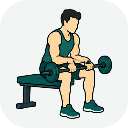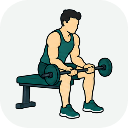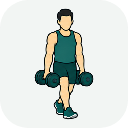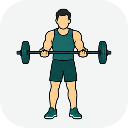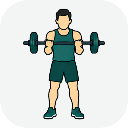
A reverse curl is a curl with the palms facing down, which turns the biceps into a bit-part player and makes the brachioradialis along the top of the forearm do most of the lifting. It is the most direct forearm builder that still trains the elbow through a full range, and it is also the fastest way to find out how weak that overhand grip really is.
How to do it
- Overhand grip, which shifts the work to the brachialis and forearm extensors.
- Expect to use noticeably less weight than a normal curl.
Common mistakes
- Letting the wrists collapse backwards under the load.
What it trains
- Forearms
- the brachioradialis and the wrist extensors do the bulk of the work in this grip
- Brachialis
- heavily involved, since a pronated grip removes the biceps' best leverage
- Biceps
- still contribute, but from their weakest position and with far less to give
Variations and alternatives
Common questions
Why is my reverse curl so much weaker than my normal curl?
Because the palm-down grip takes the biceps out of its strong position and leaves smaller muscles to do the job. Half of your regular curl weight is completely normal, and chasing the same number is how the wrists start hurting.
Do reverse curls help my grip?
They build the wrist extensors and the forearm mass on the top side, which is the half that deadlifts and heavy holds never train. They do not do much for crushing grip — that is what carries and thick-bar work are for.
Should the wrist stay flat or curl up?
Flat, in line with the forearm. Letting the wrist bend back under the bar puts the joint at the end of its range under load and shifts the work away from where you wanted it. If you cannot hold it flat, the weight is too heavy.
In StackUp. Logged as weight and reps per set, and your heaviest working set decides whether the weight goes up next time. Get the app.
Arms