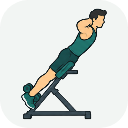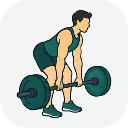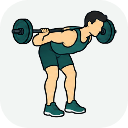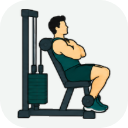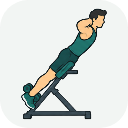
The back extension is a hinge done on a 45° or horizontal bench with your hips pinned against a pad, so the lower back and glutes work against your own torso with nothing loading your spine from above. It is the cheapest way to train the posterior chain on a day when you do not want another barbell on your back, and it scales for years by hugging a plate or a dumbbell to your chest.
How to do it
- Set the pad just below the hip bones so you can hinge freely.
- Lower until you feel the hamstrings, then come up to straight — not past it.
Common mistakes
- Hyperextending at the top, which compresses the lower back under load.
What it trains
- Lower back
- extends the spine and holds it there against the weight of your own torso
- Glutes
- drive the hips into the pad at the top — the more you round your upper back, the more they take over
- Hamstrings
- anchor the hips and assist the extension from the bottom
Variations and alternatives
Common questions
Should I round my back or keep it flat on back extensions?
Both are trained deliberately by people who know what they want. A flat back turns it into a hip hinge and puts the work on the glutes and hamstrings; a controlled round-and-unround under light weight is what actually trains the spinal erectors through their range. Pick one per set rather than drifting between them.
How high should I come up?
To a straight line from heels to head, and no further. Cranking into an arch at the top adds nothing and is where people get the pinched feeling they then blame on the exercise.
How do I make back extensions harder without a weight?
Hold your arms straight out overhead instead of crossed on your chest — the longer lever adds meaningful difficulty for free. After that, slow the lowering to three seconds, then add a plate.
In StackUp. Logged as reps per set. Add weight if you use a belt or a dumbbell and StackUp progresses it like any other lift. Get the app.
Back