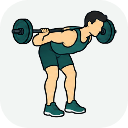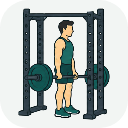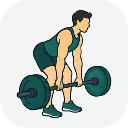
The deadlift is the heaviest lift most people will ever train: picking a loaded barbell off the floor with a flat back. It trains the whole posterior chain at once — glutes, hamstrings, the whole length of the back — and because it starts from a dead stop on the floor, there is no bouncing or momentum to hide behind.
How to do it
- Set up with the bar over your mid-foot and your shins almost touching it.
- Take the slack out of the bar before you pull — you should hear it click into the plates.
- Push the floor away and stand up. The bar stays in contact with your legs the whole way.
Common mistakes
- Letting the hips shoot up first, which turns the pull into a stiff-legged good morning.
- Rounding the lower back under load. Drop the weight rather than the position.
What it trains
- Glutes
- drive the hips forward — the main engine once the bar passes the knees
- Hamstrings
- extend the hip alongside the glutes and control the way back down
- Lower back
- holds the spine flat against a load trying to round it — this is why form matters more here than anywhere
- Quads
- straighten the knees to break the bar off the floor
- Traps and grip
- hold the bar and your shoulders in place; grip is often the first thing to fail
Variations and alternatives
Common questions
Is the deadlift bad for your back?
Deadlifting with a rounded spine under a heavy load is what hurts people, not the lift itself — done with a flat back it is one of the better ways to build the muscles that support the spine. If you cannot keep a flat back at a given weight, that weight is your form limit, not your strength limit.
Should I use a mixed grip or straps?
Double overhand for as long as it holds, then straps for your heavy work sets. A mixed grip stops the bar rolling but loads the two shoulders differently; if you use it, alternate which hand is under. Straps are not cheating — they let you train the lift instead of your grip.
How often should I deadlift?
Once a week is plenty for most people. It is the most systemically fatiguing lift in a normal routine, and heavy deadlifts twice a week is a common reason progress stalls everywhere else.
Do I have to drop the bar at the top?
No. Lowering under control is part of the lift and builds the hamstrings, though at genuinely maximal loads letting it down fast is normal. Dropping from lockout is a gym-etiquette question more than a training one.
In StackUp. Logged as weight and reps per set, and your heaviest working set decides whether the weight goes up next time. Get the app.
Back