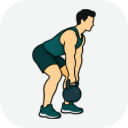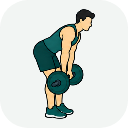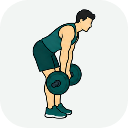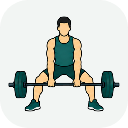
The sumo deadlift is a deadlift from a wide stance with your hands inside your knees, which shortens the bar path and puts you in a far more upright position than a conventional pull. That trades lower-back and hamstring load for hip, quad and adductor work, and it is the version that usually suits longer torsos and shorter arms.
How to do it
- Wide stance, toes out, hands inside the knees.
- Open the hips and push the knees out as you pull — it is more of a leg press than a hinge.
Common mistakes
- Starting with the hips too high, which turns sumo into an awkward conventional pull.
What it trains
- Glutes
- drive the hips forward and open — the main engine off the floor and through lockout
- Adductors
- hold the wide stance and pull the hips into the bar; they work far harder here than in a conventional pull
- Quads
- straighten the knees to break the bar off the floor, which is where sumo usually stalls
- Lower back
- holds a more upright spine, so the demand is real but lower than conventional
- Traps and grip
- hold the bar and keep the shoulders from rolling forward
Variations and alternatives
Common questions
Is sumo deadlift cheating?
No. The bar travels a shorter distance, but the start position is far harder to get into and the breaking-off-the-floor portion is brutal in a way conventional is not. It is legal in every federation and it is a different distribution of work, not less of it.
How wide should my sumo stance be?
Wide enough that your shins are roughly vertical and your hands hang straight down inside your knees, with the toes turned out around 30 to 45°. Going as wide as possible looks the part but usually kills your ability to get your hips down and drive.
Should I pull sumo or conventional?
Try both for a few weeks each and keep the one that is stronger and feels better on your hips. Long torso and short arms usually favours sumo; long arms and a short torso usually favours conventional — but the only reliable test is the bar.
Why can I not get the bar off the floor?
Sumo is hardest at the very start, and the usual cause is hips too high, which turns it into a wide stiff-leg. Drop your hips, pull the slack out of the bar before you push, and spread the floor apart with your feet as you go.
In StackUp. Logged as weight and reps per set, and your heaviest working set decides whether the weight goes up next time. Get the app.
Legs