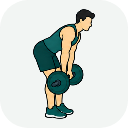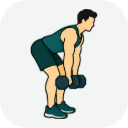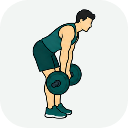
The stiff-leg deadlift is a hinge with the knees held nearly straight, usually starting from the floor. The straighter leg is the whole distinction from an RDL: it lengthens the hamstrings further and lets you reach a deeper stretch, at the cost of handling noticeably less weight and leaving the lower back with more to hold.
How to do it
- Knees almost straight and fixed, which puts everything into the hamstring stretch.
- Keep the bar close; it should brush the legs on the way down.
Common mistakes
- Rounding the back to reach lower. Range comes from flexibility, not from the spine.
What it trains
- Hamstrings
- control the hips travelling back with the knees locked out long — the prime mover, and stretched harder than in any other hinge
- Glutes
- drive the hips through to stand up
- Lower back
- holds the spine flat with the load furthest from your hips — it works harder here than on an RDL
- Traps and grip
- hold the bar for the length of the set
Variations and alternatives
Common questions
Are my legs meant to be completely straight?
Nearly, but not locked hard. A tiny amount of knee bend keeps the load in the hamstrings rather than hanging off the back of the joint — fully locked knees are where people tend to round the lower back to reach the bar.
Should I do stiff-leg deadlifts off a deficit?
Only once you can reach the floor with a flat back on the regular version. Standing on a plate adds range at the exact point where most people are already at their limit, so it magnifies a rounding problem rather than adding stretch.
Why is my lower back more sore than my hamstrings?
Usually because the bar drifted away from your legs, which turns a hinge into a long lever against your spine. Keep the bar brushing your thighs the whole way down; if it still happens at a given weight, that weight is too heavy for this lift regardless of what you pull conventionally.
In StackUp. Logged as weight and reps per set, and your heaviest working set decides whether the weight goes up next time. Get the app.
Legs