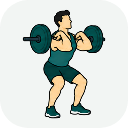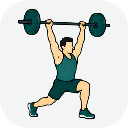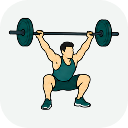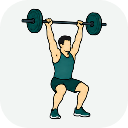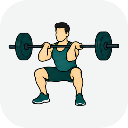
The clean takes a barbell from the floor to your shoulders in one movement, catching it in a front squat and standing up. It is a weightlifting competition lift, so the limit is technique long before it is strength — worth finding a coach for, and worth knowing that the first months are spent learning the catch rather than adding weight.
How to do it
- Pull from the floor in the same position as a deadlift, then extend hard at the hips.
- Pull yourself under the bar and receive it in a front squat.
- Learn it light. Technique here is worth more than load for a long time.
Common mistakes
- Pulling with the arms early, which stops the hips doing the work.
What it trains
- Quads
- drive the first pull off the floor and stand the catch up out of the bottom
- Glutes and hamstrings
- extend the hips explosively — the part that actually throws the bar upward
- Traps
- keep the bar rising and pull you under it once the hips have finished
- Lower back
- holds the spine in one position from the floor to the catch, which is the whole technical problem
- Upper back
- keeps the bar close to the body; if it drifts forward the lift is already lost
Variations and alternatives
Common questions
What is the difference between a clean and a power clean?
Where you catch it. A full clean is caught in a deep front squat and stood up; a power clean is caught with the thighs above parallel. The full version lets you clean more weight because you drop further under the bar, and it needs a front squat you are comfortable in.
Do I need coaching to learn the clean?
It helps enormously, and more than on any other lift in the gym. The clean is a sequence rather than a single effort, and a fault in one part shows up as failure in a later part, which is very hard to diagnose from inside the lift. If no coach is available, film every set from the side.
Why does the bar hit my collarbones hard in the catch?
Usually because you are catching late — meeting the bar rather than being under it when it arrives. The elbows should already be whipping through as the bar reaches chest height, so it lands on the shoulders with the hands merely holding it there. Lighter weight and faster elbows fix more of this than any cushioning does.
How many reps should I do on cleans?
Singles, doubles and triples. Technique degrades quickly under fatigue and a sloppy clean is a wasted rep at best, so weightlifters accumulate volume across many low-rep sets rather than in long ones.
In StackUp. Logged as weight and reps per set, and your heaviest working set decides whether the weight goes up next time. Get the app.
Full body