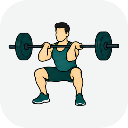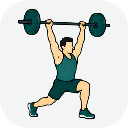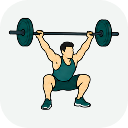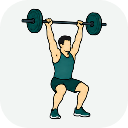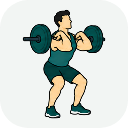
The power clean is a clean caught high, with your thighs above parallel, so there is no deep front squat to stand up out of. That makes it far quicker to learn than the full lift and it is why most strength programmes that use any Olympic lifting use this one — you get the explosive hip extension without months spent on the catch position.
How to do it
- Same pull, but you catch it above parallel instead of in a full squat.
- If you have to squat under it, it was a clean rather than a power clean.
Common mistakes
- Catching with the elbows low, which puts the bar on the wrists.
What it trains
- Quads
- drive the bar off the floor and absorb the catch
- Glutes and hamstrings
- extend the hips hard at the top of the pull — the part that makes this a power exercise at all
- Traps
- shrug the bar up and pull you under it
- Lower back
- holds position from the floor upward; it is the first thing to fail when the weight is too heavy
Variations and alternatives
Common questions
Is the power clean worth doing if I am not a weightlifter?
If you want to train producing force quickly, yes — there are few other ways to do it with a barbell. If you only want to get bigger or stronger, it is a technical lift that will limit you by skill rather than by muscle, and your time is better spent on squats and pulls.
Why do I always catch the bar on my wrists?
Because the elbows are coming through too slowly, so the bar arrives before the shoulders are under it. Drill the turnover with a light bar until the elbows whip round as the bar passes your chest, and let the hands open so the bar sits on your shoulders rather than in your palms.
How many reps should I do on power cleans?
Two or three per set, rarely more than five. Every rep is a fresh maximum-speed effort and the whole point disappears once bar speed drops — you accumulate work through more sets, not longer ones.
Can I power clean in a normal gym?
You need bumper plates and somewhere it is acceptable to drop or lower a bar hard. On thin iron plates and a wooden platform you will be lowering every rep under control, which is both slow and hard on your back at real weight — check before you build a programme around it.
In StackUp. Logged as weight and reps per set, and your heaviest working set decides whether the weight goes up next time. Get the app.
Full body