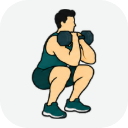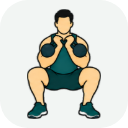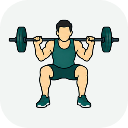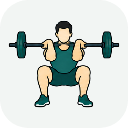
The front squat puts the bar across the front of your shoulders instead of your back, which forces you to stay upright or drop it. That upright torso is the whole point: it shifts load onto the quads and off the hips, and it makes the abs and upper back work far harder than a back squat does at the same weight.
How to do it
- Bar on the front delts with the elbows high — the rack position does the holding, not the hands.
- Stay upright. The moment the chest drops, the bar rolls forward.
Common mistakes
- Letting the elbows drop, which is how the bar ends up on the floor.
What it trains
- Quads
- extend the knees from a deep, upright bottom position — they take a bigger share than in a back squat
- Abs
- hold the torso vertical against a bar trying to tip you forward — usually what fails first
- Glutes
- extend the hips, though less than in a low-bar back squat
- Upper back
- keeps the elbows up and the rack position from collapsing
Variations and alternatives
Common questions
My wrists hurt in the front rack — what do I do?
The bar should sit on your front delts, not in your hands, so your fingers are only stopping it rolling forward. If a full grip hurts, use two or three fingers under the bar, or switch to a crossed-arm rack where your hands sit on top of the bar instead.
How much less can I front squat than back squat?
Roughly 15 to 25 per cent less for most people, and the gap is wider if your abs and upper back are the weak point rather than your legs. Treat them as separate lifts with separate numbers.
Why does the bar keep rolling off my shoulders?
Your elbows dropped. The moment the upper arms come below parallel, the shelf disappears and the bar rolls forward — drive the elbows up and forward at the start of every rep and keep pushing them up out of the bottom.
Is the front squat better than the back squat for quads?
For quads specifically, yes, slightly — the upright position and deeper knee bend load them more per kilo. For total load and overall leg work, the back squat still wins, which is why most people run both rather than choosing.
In StackUp. Logged as weight and reps per set, and your heaviest working set decides whether the weight goes up next time. Get the app.
Legs