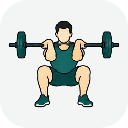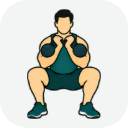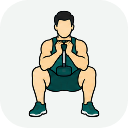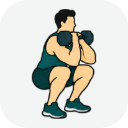
The dumbbell front squat is a squat with a dumbbell resting on the front of each shoulder, elbows pointing forward. Like the barbell front squat, the load in front keeps your torso upright and puts the quads in charge — but there is no bar to unrack and no wrist flexibility needed for a front rack, and with two dumbbells it loads well beyond what a goblet squat can.
How to do it
- Rest one end of each dumbbell on the front of your shoulders, palms facing in, elbows up and forward.
- Sit straight down between your knees with your chest up, to at least thighs parallel.
- Drive up through the whole foot and keep the elbows high all the way.
Common mistakes
- Letting the elbows drop, so the dumbbells roll forward and pull your chest down with them.
- Letting the knees cave inward as you come up.
What it trains
- Quads
- extend the knees from a deep, upright bottom position — the prime mover
- Glutes
- extend the hips as you drive out of the bottom
- Abs
- keep the torso upright against two weights trying to tip your chest forward
- Upper back
- holds the elbows up so the dumbbells stay on your shoulders
Variations and alternatives
Common questions
Dumbbell front squat or goblet squat?
Goblet squat to learn the pattern, dumbbell front squat once a single dumbbell is no longer enough. Two dumbbells let you load more in total, but balancing them on your shoulders asks more of your upper back and takes a few sessions to feel settled.
How do I hold the dumbbells for a front squat?
Rest one end of each dumbbell on the front of your shoulder, palms facing in, elbows pointing forward and up. Your shoulders carry the weight and your hands just stop it rolling off — if your arms are holding the dumbbells up, they will tire long before your legs do.
How deep should I squat?
Thighs at least parallel to the floor, and deeper if your heels stay down and your chest stays up. The load in front makes an upright deep squat easier than it is with a bar on your back, so this is a good place to own the bottom position.
How many reps should I do?
Eight to twelve suits it, because holding the dumbbells in place tends to end very heavy sets before your legs do. Set that range in StackUp and it suggests the next weight when your heaviest set reaches the top.
In StackUp. Logged as weight and reps per set, and your heaviest working set decides whether the weight goes up next time. Get the app.
Legs