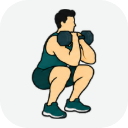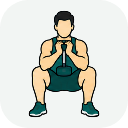
The goblet squat is a squat with a single dumbbell or kettlebell held against your chest. The counterweight out front lets you sit down between your knees with an upright torso, which is why it is the easiest squat to learn properly and the one worth doing before you put a bar on your back.
How to do it
- Hold a dumbbell or kettlebell at chest height, close to the body.
- The front load keeps you upright — use it to learn the depth you want under a bar.
Common mistakes
- Letting the weight drift away from the chest, which pulls you forward.
What it trains
- Quads
- extend the knees — the prime mover, and the counterweight keeps them loaded
- Glutes
- extend the hips out of the bottom
- Abs
- brace against a weight held out in front of your centre of mass
- Upper back
- holds the dumbbell against your chest instead of letting it drag you forward
Variations and alternatives
Common questions
How heavy can a goblet squat actually get?
Whatever the biggest dumbbell in the gym is, and usually your arms and upper back run out before your legs do. That ceiling is the real limitation — once a set of ten with the 40 stops being hard, you have outgrown it and want a barbell or a hack squat.
Should I hold the dumbbell by the head or the handle?
Cup the top head with both hands and let the weight hang vertically against your chest. Gripping the handle sideways puts the load further from your body and turns it into a front-raise hold your shoulders will fail first.
Is a goblet squat enough on its own for legs?
For a beginner, for a while, yes. Once the dumbbell stops being the limit it becomes a warm-up or an accessory rather than your main leg work — the pattern is right, the load just cannot keep going up.
In StackUp. Logged as weight and reps per set, and your heaviest working set decides whether the weight goes up next time. Get the app.
Legs