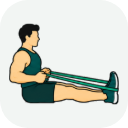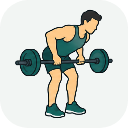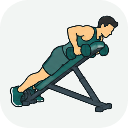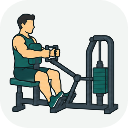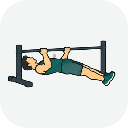
The inverted row is a bodyweight row done hanging under a bar set at waist or chest height, feet on the floor. It scales without any equipment at all: raise the bar to make it easier, drop it and put your feet up to make it hard. That makes it the horizontal-pull equivalent of a push-up, and the most useful row for anyone training without a rack of dumbbells.
How to do it
- Set the bar so you can hang with straight arms and your body in one line.
- Pull your chest to the bar and keep your hips up throughout.
Common mistakes
- Letting the hips drop first, which shortens the range and takes the back out of it.
What it trains
- Upper back
- retracts the shoulder blades to pull your chest to the bar
- Lats
- drive the elbows back past your ribs
- Biceps
- bend the elbows, more so with an underhand grip
- Glutes and abs
- hold the body in a straight plank so the hips do not sag toward the floor
Variations and alternatives
Common questions
How do I make inverted rows harder?
Lower the bar first, then put your feet on a bench so your body is above horizontal, then add a plate on your chest or a weighted vest. Each step is a big jump, so a slow three-second lower is the useful in-between when the next step is too much.
Where should I set the bar height?
Wherever you can get 8 to 12 clean reps with your chest touching. Higher bar and a steeper body angle is easier; the bar at hip height with legs straight is roughly where it becomes a serious exercise for most people.
Are inverted rows a good substitute for pull-ups?
They are a substitute for barbell rows, not pull-ups — one pulls horizontally, the other vertically, and they load the lats at different angles. As a way to build the pulling strength that leads to a first pull-up, though, they are excellent and much easier to do at home.
In StackUp. Logged as reps per set. Add weight if you use a belt or a dumbbell and StackUp progresses it like any other lift. Get the app.
Back